Showing posts with label Sally Thomas. Show all posts

Thursday, September 23, 2010

Prelude to DeLay (Ch.11 Pt.1)

My father, accused of all sorts of wrong doings by my mother, sat in our living room in his Hanes boxers. He picked up the phone after my mother's prodding, and telephoned the famed pedagogue, Dorothy DeLay at Juilliard. My mother stood with her arms folded. I eavesdropped from the kitchen doorway. After finally getting through to Miss DeLay, he introduced himself as the father of a promising, young violinist who had studied for the past three years with Sally Thomas on Honorary Scholarship at Juilliard and Meadowmount, soloed with the Boston Pops under Harry Ellis Dickson, and had recently been offered a conditional acceptance into the Heifetz Masterclass. My father may have been tone deaf but he had perfect sales pitch.

"You  see, Miss DeLay—do you mind if I share a bit of background? Our fourteen-year-old violinist, Marjorie, is a sensitive, sensitive youngster. You give her one harsh look, a look that signals dissatisfaction with her work, and she'll begin to cry. That former teacher of hers—I mean no disrespect—I'm sure you're friends and all that, but—" He lowered his voice. I thought I heard my father say, "colder than a nun's navel. And if my daughter's gonna have to leave Juilliard on account of her, it won't be for anyone other than Heifetz. But she'd love nothing more than to return to Juilliard and study with you."

I edged my way into the living room to witness my father's performance. As far as I was concerned, he could have won an Oscar for the deft handling of an internationally renowned pedagogue.
He pointed to me and then to his forehead, as if to say, listen and learn. He was about to prove his intellectual prowess and business acumen. "That's right. I couldn't have this kind of conversation with her as I'm having with you."
My mother stroked his arm for encouragement.

"I'm gonna let you in on a secret, Miss DeLay." My father leaned over the secretary desk and distractedly picked up a ballpoint pen to doodle in the phone book. "Marjorie and my beautiful wife, Frances, hop onto the 2 A.M. Greyhound Bus on Saturdays in Boston and arrive in time for an 8:00 lesson at Juilliard. And I drive them to the bus terminal every week to see them off for the five hour commute. How's that for dedication?"
He nodded enthusiastically. I couldn't make out Miss DeLay's response, even as I crept closer to my father. The scent of Old Spice tickled my nostrils, and I was about to sneeze.
"Is that right, Miss DeLay? You have a young violin student by the name of David Kim who flies in from South Carolina with his mother two times a week? Wait till I tell my wife, Frances. Oh, you're gonna enjoy Frances! You know, she plays the violin too. An amateur, she calls herself, but I think my Frances is a virtuoso."
My mother's hands flew to her mouth as she stifled a laugh. "Your father," she whispered to me.

"Now my next question, Miss DeLay: Will our Marjorie need to audition for you?"
My father shook his head, no, to signal Miss DeLay's response, and waved his finger for us to keep still.
"You do, huh. You remember Marjorie's performance of the Bruch Concerto. Yes, that's right. She was runner-up for the Juilliard Pre-College solo competition last year. Oh, what a fantastic memory you have, Miss DeLay. How do you manage to remember all those marvelous students from around the world? Frances tells me that you teach violinists all the way from Israel and the Soviet Union. They arrive at the school in droves! When I tell my little girl, Marjorie, that she's now a Dorothy DeLay pupil and will be returning to Juilliard, I'll bet you anything she'll head straight to her violin."

When the telephone interview had ended, my mother cheered "bravo." She wrapped her arms around my father and reached for a kiss. He pulled her down to his lap. As I stood and watched with amazement—were these my parents?—my mother shot me a glance.
"Go practice, Marjorie Jill. Time is of the essence."

Thursday, September 9, 2010

Dog Days of Summer (Ch.10 Pt.2)

My father tried every technique to make amends for his violent outburst which, fortunately, caused no physical harm to my mother. My parents negotiated a peace treaty: my mother and I would undergo a trial period in Los Angeles for the summer of '73. My father would find a furnished rental unit for us, send my mother her weekly allowance, and I would begin studies with Claire Hodgkins, assistant to Jascha Heifetz, in preparation for the class. The bi-coastal agreement would buy my parents time to sort things out. Neither one of them were fazed by a summer of separation. In the meantime, I envisioned Miss Hodgkins to be a carbon copy of Miss Thomas, as if all female teaching assistants were made out of the same materials. I stuffed a wad of Kleenex into my purse for the introductory session.


♪ ♩ ♪

Claire Hodgkins was tending to her front garden when we arrived at her Spanish style home near Hollywood on Wilcox Avenue. A brown sausage dog barked furiously by her side and bared its teeth. "Caesar, Caesar, no!" scolded Miss Hodgkins. I stiffened with alarm. Miss Hodgkins laughed. "Oh, don't be afraid. He has a little dog complex, that's all."
My mother edged up the front steps. "You must be Claire Hodgkins. I recognize you from the masterclass series on TV. You're even prettier in person."
Miss Hodgkins smiled and patted the dog's head. He rolled over to expose his belly and yawned. Miss Hodgkins then removed her gardening gloves, and reached to shake our hands.
"I'm Frances Kransberg. Just call me Fran, though. And this is—"
"Marjorie?"
"Marjorie," gushed my mother.
"Hello Marjorie. Won't you both step inside?" offered Miss Hodgkins, pushing open the front door. "We're having perfect weather today, don't you think? I can't seem to get enough of the outdoors!"
"I'd take this dry heat any day over East Coast humidity," said my mother. "But I walked up quite a shvitz."
Miss Hodgkins giggled with amusement. She removed her broad-rimmed, straw hat and shook out her blond curls.   

"You're such a beautiful lady!" My mother persevered, standing at the doorway.
I rolled my eyes. How many times would my mother use this refrain?
"So long-legged and slender. That olive skin against light hair. I'm envious. If you don't mind my asking, Miss Hodgkins, what is your ethnicity?"
"Come on into the living room ladies, please. Caesar, no!"
The dog plowed between my legs and barreled into the house, nearly causing me to drop my violin case.
Miss Hodgkins chuckled. "Oh Caesar, you're hopeless. I apologize in advance for my dog's behavior. With my husband away on business trips, Caesar has taken on the role of protector. He's really harmless, though. Oh, but getting back to my heritage. Fran, is that what you said your name is?"
My mother nodded.
"I'm sort of a mixed breed. But the height and 'flaxen hair'—as Mr. Heifetz teases—I get from my Finnish roots—maternal side, that is."
Finished, I thought?
"Watch out for these steps," Miss Hodgkins warned. "I've had people spill right into my living room. Marjorie, you can get set up and tuned by the grand piano. I look forward to hearing you play."

My mother gasped as she entered the sunken living room filled with art pieces, musical objects and artifacts. "This is a charming house, Miss Hodgkins."
"Call me Claire."
 "Just look at all these treasures, Margie. It has the feel of an artist's home. Do you know what I mean?"
"You mean messy," giggled Claire. "My husband acquires all sorts of trinkets from Indochina. He's become quite the collector. If he keeps this up, I'll need extra storage space."
"If we move to Los Angeles, I'm determined to find a Spanish style home similar to this one. My husband, John, dabbles in real-estate, so he'll know a good deal when he sees one."
"Sounds like you've got a wonderful man."
My mother's chest puffed with pride. "In addition to real-estate and Kransberg's Furniture, my husband owns a warehouse. If a client dies, and their possessions go unclaimed, they're his. One time John surprised me with boxes full of out-of-print, leather-bound sheet music stamped with the mysterious name H.A.Poole, from Japan yet. I guess those acquisitions make my husband sort of collector, too."

Miss Hodgkins cast a sympathetic glance at my mother. "It must be difficult being away from your husband. I can commiserate. Mine comes home perhaps twice a year. I do miss him."
My mother grew quiet, then adjusted her wristwatch. "I didn't mean to hold up the lesson by kibitzing. Shall I stay and listen or do you prefer that I wait outside?"
"Oh, soak up the rays, Fran. Marjorie and I will begin our routine. As you know, Mr. Heifetz is a stickler for scales."

I waited for the front door to close, then checked my strings. The pure gut A and D strings that Mr. Heifetz insisted all students use kept going out of tune. Miss Hodgkins sank into a floral sofa and crossed her legs. "Let's get down to business. Begin with a C Major single-note scale in three octaves. Start in first position. Remember, open strings going up, and fourth finger coming down, but we use 4-4 on the half step as the scale descends. The trick is to shift into third position on the D, and again to fifth, seventh and ninth positions on the E string. Go on."
I nodded and smiled. Her words made as much sense to me as hieroglyphs.
"Maintain the same bow speed as you slur two notes, then four, eight and twelve. Don't forget to add the two additional notes going up as well as coming down, so that you have a total of twenty-four notes both ways."
"OK," I said, futzing with my pegs. When did she say to shift?
"After C Major, we'll turn our attention to A Minor, the relative minor, in melodic and harmonic, but not  natural. Then we'll work on three octave arpeggios followed by scales in patterns of thirds, sixths, octaves, fingered octaves, and tenths."


My eyes glazed over with these directives. I steadied the bow above the string to pull out a C. Just then, the four-legged beast whipped across the living room floor and barked furiously, as if sensing a poltergeist or chasing a rabbit. He skidded along the oak floor to my feet.
"Caesar!" snapped Miss Hodgkins. "Hey, C Major for Caesar," she giggled. "No, Caesar, down boy, down!" The canine sausage grabbed my leg with his front paws. I could feel his nails dig into my flesh and a blast of hot breath penetrate my skin. The dog mounted my leg and jerked spasmodically. I tried to shake the demented beast off by thrashing my leg, and felt blood rush to my face. Miss Hodgkins tilted her head back, slapped her thigh, and exploded with laughter. "Oh Marjorie! Caesar likes you!"
"Yogi" by soggydan@photobucket

Thursday, July 22, 2010

A Bus Ride (Ch.7)

Saturdays were busy, busy, busy at the Juilliard School Pre-College Division. Private one-hour lessons with Sally Thomas were followed by concert orchestra with Isaiah Jackson, chamber music, solfege, recitals, string ensemble with Wesley Sontag, and music theory with the cantankerous, chain-smoking Frances Goldstein.  
At  five o'clock sharp, I met my mother in the lobby for the long commute back to Boston. She waited by the elevators, eager to hear a report about my classes.

"Tell me about your day," she said, as we left Lincoln Center to walk down to Port Authority.
"It was fine."
"Fine? That's all you have to tell me?"
I didn't want my mother to know that I flunked Goldstein's music theory exam; Sally Thomas had again made me reach out for Kleenex; and my sight-reading skills in orchestra were so deficient that I was placed in the back of the second violins.
"Hungry?" She asked, as we passed a Sabrett Hot Dog stand in Times Square. The aroma of fresh pretzels wafted into my nostrils. "Fresh salted pretzels, plump, juicy hot-dogs," yelled the vendor. A hot dog dropped onto the pavement. He stooped to pick it up with his fat fingers, and tossed the flying wiener back into the cart.
"Ugh. Gross me out," I said.  
"New Yorkers," said my mother.

At Port Authority, my mother pointed to a sign at the Terminal Deli. Whole Broasted Chicken for $2.99. 
"Now that's a deal," she said. "Let's get that for our supper on the bus. It'll be like a picnic."
After buying chicken and beverages at the Terminal Deli we stopped at a magazine stall. 
"Nothing beats The New York Times," she said, reaching into her coin purse. "How about you, my dolly? What would you like to read on the bus?"
The front page of The National Enquirer featured: Baby born with two heads and a tail.
"Mummy, can I have that?"
"I suppose, but what an odd headline. You think it's true?"

We rushed to Gate 14 with bags, violin case, and broasted chicken. My mother gave the bus driver the tickets. She plopped our belongings onto two seats behind the driver.  
The aroma of  chicken had all ready begun to permeate the bus. A woman across the aisle plugged her nose, and the man seated behind us pulled his coat over his face.
My mother sat down and slowly released the chicken from the paper bag. The aroma intensified. "Here, precious." She split the bird with her fingers. "Your half."
Noisily, greedily, like a woman half-starved in the wild, she ripped the drumstick from the thigh, gnawed voraciously, cracked into the bone, and sucked the marrow.
"This chicken is out-of-this world," she said, waving the remains of drumstick. "I was so busy comparing notes with the other Juilliard mothers that I forgot to eat anything all day. You better dig in, before there's nothing left."
I bit into a tender, succulent thigh and then moved on to a wing. By the time we hit Yonkers Stadium, there was nothing left but a pile of bones.
"Now, what to do with this mess?"  
"Dunno." I wiped my hands on a Towelette and unfolded The National Enquirer.
"Feh," she said. "Let's get rid of it. I'll put it by the toilet. Good idea?"

I popped open a can of Diet 7 Up and read the tabloid with complete absorption. How could a baby with two heads and a tail survive? What about the real-life mermaid?  I flipped to the next  page. 
Twelve year old violinist hailed as Paganini Incarnate! 
It can't be, I thought. I read with wide-eyed amazement about Dylana Jenson, a girl from Los Angeles who displayed such technical prowess that the renowned conductor of Seattle Symphony, Milton Katims, believed her to be the reincarnation of Niccolo Paganini.
Niccolo Paganini, the greatest violinist who ever lived! 
My mother returned to her seat after depositing the chicken bones by the toilet.
"Mummy, read this," I said. "This girl concertizes all over the world. She's appeared on the Tonight Show and soloed with New York Philharmonic under Maestro Andre Kostelanetz."
My mother skimmed the article.
"Well, how about that," she said. "There's so much competition out there. It's a good thing that we have Mr. Muller. He'll see to it that you get concerts, too. And you know, at age eleven, it's not a day too soon."

My mother, Frances Kransberg, loved bus rides. The motion and monotony soothed and comforted her. She'd fall asleep with a faint smile on her lips, awaken for brief spells, babble in hushed tones, and drift back to sleep with her head slumped forward. It was on Greyhound bus trips that my mother shared her innermost thoughts. During an awakening, she had words for my three older sisters, Judy, Susan and Karen, who were now busy with children of their own. 

"I sense that deep down your sisters are envious of you. But if they'd think back, they'd realize I wanted the same opportunities for them. I gave them all music lessons, plus ballet and drama classes, but they didn't take the studies seriously. All in all, I think they might have been spoiled. I wanted Judy, Sue, and Karen to have everything. But through trial and error, I realized that it's not how much you do, but what you do, and how well you do it, that counts. The more energy you pour into one thing, the more you get out of it. Farshteyst?"

To prod my mother on, I'd bate her with questions. I adored being the favored daughter.
"Mummy, what sort of pianist was Judy?"
My mother shook her head. "Your eldest sister Judy was musical, no question about it. That girl had talent. But whatever she played, I couldn't recognize the piece. Counting mystified her, and every composer came out sounding—well, like Judith Ellen. Funny, but true."
"How about in school? Was she a good student?"
My mother tilted her head back and closed her eyes. "A scholar my Judith Ellen was not—but everyone loved her. What a sense of humor she has—such a character. My parents, may they rest in peace, were crazy about her. When Judy was born, she looked just like my Bubbe Chashe. The resemblance was uncanny. Your grandmother took one look at Judy as an infant, broke down and cried. She was convinced that her mother had been reborn. Jewish people are crazy that way. We believe in such things as reincarnation."

"How about Susan?" I unwrapped a piece of Dentyne. A bus ride without gum was unthinkable.
My mother emitted a long, painful sigh. It was the sort of sigh that echoed throughout the entire bus.
"Susan was, what's the word? Combative. Maybe because she was the middle child. I don't know. She wasn't pliable, like you."
"What do you mean?"
"When Susie took violin lessons, she battled not only with me, but with her teachers. She's always had such a temper. I remember she'd get angry out of the blue. One time, when your sisters were rehearsing piano trios, she took her violin bow and thwacked it over poor Judy's head causing it to split into pieces."
"Judy's head?"
"No! The bow, silly."
"What did Daddy do?"
"Your father? You know what a short fuse he has. He threatened, 'I'm not buying another goddamn violin bow! That's the end of the music lessons.'"

"Tell me about Karen, Mummy."
Eleven years my senior, Karen was closest in age to me, and I felt the most tenderness for her.
My mother gazed longingly out the window at the rolling hills and meadows.
"Karen could have become a professional cellist, I think. Beautiful tone and vibrato came naturally to her. But I couldn't get that girl to practice or study for anything. Karen was obsessed with boys. Such a waste of talent and intellect. When God gives you a gift, you should use it."
"Oh yes, Mummy. You're right." I reached out for her warm hand. I took delight in knowing that I pleased my mother more than any of my sisters.
"Oh look, my wonderful daughter, we're just outside Boston. The ride went so quickly—"

The bus driver tapped the microphone and cleared his throat. His deep voice boomed over a loud hiss.
"Sss-Someone's left a pile o' chicken bones by the toilet in the WC. Would whoever left them bag o' bones in the bathroom, kindly refrain from doin' that next time? Please, folks. No more food scraps or bones in the bathroom. Thank you. And remember, go Greyhound."
in photo left to right: Karen, Susan and Judith Kransberg in 1950s
Thursday, July 1, 2010

Sunday Open Concert (Ch.5 Pt.4)

Sharan opened the door, and Mr. Galamian stood in front of her. He snapped his fingers. "You must practice," he growled. I fled from Sharan's room, hoping Mr. G. hadn't recognized me, and returned to my cubicle. I knew that if I didn't practice, I would never be accepted as Mr. G's pupil. And if I didn't get to be his pupil, I would never become a concert violinist. And if I didn't become a violinist, my mother would be sorely disappointed. Frantic, perhaps.

There were consequences to our having broken the practice rules. Fannie and Miss Thomas held a meeting for all the Main House girls, and warned that if we were caught not practicing again, all privileges would be taken from us, and our parents called.  Ceo, pronounced say-oh, one of the cafeteria cooks, was assigned an additional role as practice monitor, in other words, a spy. I was sent off to Lilacs Cottage to take additional weekly lessons with Ani Kavafian, an accomplished pupil of Ivan Galamian's. Ani's task was to do damage control, as my practicing left much to be desired.

Meadowmount presented students in recital three or four times a week in the concert hall. Most of the events were closed to the public, but Sunday matinees were open to friends and family members. Attendance was mandatory for students. The faculty would sit on a long wooden bench, off to the side. Students would carefully observe Mr. Galamian and his assistants, assessing their reactions to student performances. A nod from Mr. Galamian could mean the start of an international career, or concert management. My parents had planned to visit after my initial two weeks of music camp, and alas, they showed up on a Sunday eager to hear one of Meadowmount's rising stars.


♪ ♩ ♪


Twelve-year-old violinist Stephanie Chase stepped lightly and briskly onto the stage, and acknowledged her audience with a warm smile. The hall, small enough for intimacy, was bustling with family members and friends. I sat near the last row with my father. His head drooped from heat and exhaustion. He had driven from Wenham, Massachusetts to Westport, New York through the night, and would drive directly home after the concert for work the next day; a round trip of eleven hours. From the corner of my eye, through the mass of audience, I saw my mother fifth row center. She was determined to sit as close to the stage as possible. Her bewigged head was cocked slightly, a pose she maintained whenever listening intensely. Stephanie tossed her long, chestnut brown hair away from her face, and smiled politely at the enthusiastic audience. She then unfolded a white handkerchief and calmly placed it under her chin. Stephanie, at age twelve, maintained the aura of a seasoned professional. A quick glance at the piano accompanist, David Garvey, after readying her violin, and Stephanie dug into a display of Wieniawski's pyrotechnics. From start to finish, her performance was flawless. With eyes closed, Stephanie exhibited an intense level of concentration, and mercurial technique. She practiced six hours daily, and resided during the year with her teacher, Sally Thomas. During Stephanie's polished performance, I wondered if she ever made mistakes. It was difficult enough for me to pronounce Wieniawski but this girl—this twelve-year-old girl—rendered a flawless performance of the work in its entirety with unrivaled poise.

The audience erupted into a feverish applause before Stephanie had even finished the last chord. She greeted the reception with a look of humility, bowing and lip-syncing "thank you" to the audience. Her chest heaved like a gymnast from a perilous work out. With her handkerchief, Stephanie wiped the perspiration from her neck and chin. My mother bolted up from her chair. "Bravissima! Encore!" I heard my mother's voice rise above the chorus of cheers, and she clapped her hands high in the air. The audience rose to their feet, and Ivan Galamian, seated along the side wall with the rest of the faculty, Sally Thomas, Margaret Pardee, David Cerone, Paul Makanowitzky, Josef Gingold and Dorothy DeLay, beamed with delight. He cupped his hands and whispered something into Miss Thomas's ear, for Stephanie was her prize pupil. And to this day I remember a thought that struck me: It was my mother's misfortune that she had me for a daughter rather than Stephanie Chase. 

Thursday, June 24, 2010

First Lesson with Sally Thomas (Ch.5 Pt.3)

At Meadowmount, I began studies with Sally Thomas, Ivan Galamian's first associate, as she preferred to be known. She was reputed to be "tough as nails" by Meadowmount campers, and with her cropped hair and reserved nature, Miss Thomas could be intimidating, especially to an eleven-year-old. Rumor had it that she kept a pet crow and unleashed it on lazy students. The crow struck terror in me; I knew that due to homesickness, my first week of practicing had been a half-hearted attempt.

Our first lesson began with a pencil in place of a bow. I was to learn the right-hand technique, as taught by Ivan Galamian and his disciples, which was based on the Franco-Belgian school of violin playing. Slowly, I became aware of the right hand and thumb mechanism. Miss Thomas took the pencil away and slipped the bow into my hand.
"Bend the thumb, release the thumb. Round the fingers, lengthen the fingers." We worked on open strings with slow strokes, paying close attention to every detail, then a one-octave scale. Finally, a two octave scale was introduced with an assortment of bowing patterns, and then three octaves. 
"Square the bow in the middle, angle at the frog. Draw the bow out at the tip. Out, in, down, up, bend, release," Miss Thomas reminded. 
I missed my former teacher, Sarah Scriven. Before summer, we were about to step into the late Classical and early Romantic repertoire. Knowing Mrs. Scriven, she would have shrieked, sighed, and groaned at my mistakes, but her eyes would have shined with luminosity for the music and me.
I took a deep breath and looked longingly at my watch. The hour had seemed like an eternity.
"Are you late for something?" Miss Thomas asked, with narrowed eyes.
I felt like crying, and glanced at the box of Kleenex on the piano. Miss Thomas strode to the studio door and gestured for me to pack up. Our first lesson had ended.

I walked along the pebbled parking lot back to the Main House, dragging each step. Everyone was busy at work during morning practice hours. Shuffling past Sharan's room, on the way to my lonely room, I heard whispers and stifled giggles, but also the violin. I knocked softly on Sharan's door. I detected rapid footsteps, someone whispering "shush" and the sounds of tuning. Sharan opened her door with the violin propped under her chin and bow by her side. Her frizzy hair cascaded down to her waist. Sharan heaved a sigh of relief. "Oh, thank goodness. It's only Smudgie. Janna, you can come out now." 
Janna, a thirteen-year-old Main House violinist, tumbled out of the closet.
"What's going on?" I scanned the room. It was palatial compared to mine, with a bay window over-looking the gardens.
"Shhh. Be quiet. We thought you were Fannie, the house mother," whispered Janna, smoothing her sleek, black hair into a long ponytail. "Gosh, the way she sneaks around spying on us with that whistle around her neck, gives me the creeps. We wouldn't want to get in trouble around here for not practicing—but we don't want to practice, either, right Sharan?" 
"I could have sworn you were Mr. G. Sometimes, when he's not teaching, he stands behind the door and listens. It's spooky. I can see his shadow." Sharan blew a wisp of hair out of her face. "I swear, Galamian looks like Count Dracula."
"What are you guys up to? I heard actual playing."  
"We've recorded ourselves practicing, and let it playback during the hour," admitted Janna. "Sharan's idea."
 "Smudgie, don't you have a cassette player?" Sharan's dark, brown eyes gleamed with mischief.

I returned to my cell above Galamian's studio and lifted the Sony from a drawer. I pressed record, and got down 50 minutes worth of scales and etudes, replete with the bowing patterns suggested by Miss Thomas.
During the playback, I tiptoed back to Sharan and Janna's room. They sat on the bed cross-legged while reading Seventeen and Cosmopolitan Magazines. Kreutzer number two played   in the background with glaring mistakes and obvious self-corrections. They sipped Coke and dug their musical fingers into a box of Entenmann's chocolate-chip cookies.
"Are those good?" I licked my lips.
"Don't tell me," said Janna, gliding her tongue over her braces, and holding up a tiny, chocolate-chip laden cookie. "You never tasted an Entenmann? Oh my gosh. Where have you been kiddo?"
And just as I was about to experience the pleasures of an Entenmann, there was a loud rap at the door, and a dark shadow.
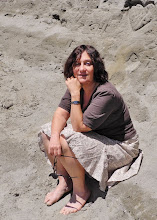
in photo: Sally Thomas with me in 1970