Showing posts with label Meadowmount. Show all posts

Thursday, October 21, 2010

Scheherazade at Interlochen (Ch.12 Pt.1)

I had returned to National Music Camp at Interlochen for a second summer in 1975. Not out of choice, but because my mother fell in love with the place, a music camp in northern Michigan surrounded by lakes and forests that offered a rich regimen of music and art classes. "Oh, if only I could be you," she'd intone at each visit. If it had been up to me, I'd have returned to Meadowmount. There I could at least have tested the waters of independence and crashed midnight parties. But at Interlochen there was little chance for enterprising escapes. I'd live in a rustic log cabin with eleven other girls my age under the watchful eye of a counselor, and partake in cabin clean up with my two friends: the broom and dust bin.

Though my violin teacher, Dorothy DeLay, had invited me to Aspen, it was J. Frederick Müller, my manager, who sold the Interlochen experience to my parents. As guest lecturer and adult workshop coach, Müller had an established presence at the camp. I had been his discovery; the poster child for the string instrument company Scherl & Roth. But by the time I went off to Interlochen, solo engagements had become increasingly difficult to obtain. At sixteen years of age, I was no longer a child sensation.

The World Youth Symphony Orchestra extended its arms to talented youngsters from every corner of the globe. If you glanced up at the stage of Kresge Auditorium, you'd find these words emblazoned like the Ten Commandments: Dedicated to the promotion of world friendship through the universal language of the arts. And that summer of 1975, students traveled from as far away as Romania, Israel, Finland and Iceland. Everywhere you turned you'd hear foreign dialects. National Music Camp at Interlochen would be—how did my mother put this?—a broadening experience.

The day began with a bugle call, or reveille, at 6:45 A.M. It could have been the the military, as far as I was concerned. Dressed in uniforms of red sweaters, white blouses, and navy blue knickers, campers resembled American flags as they tore out of their freezing cabins for breakfast. Teeth chattered at the speed of 64th notes. The morning air smelled of lake water, damp earth and fresh baked bread from the cafeteria. At breakfast, over a bowl of granola and milk, I found myself noticing that some of the gawky, pimply-faced boys from the previous summer had turned into striking young men with sideburns and light mustaches. Camp uniforms didn't offer much to see, of course, but male voices had deepened, and unbuttoned shirts revealed tiny tufts of chest hair.

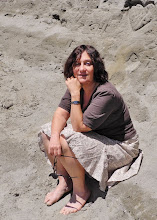
Me and Jeannie Wells Yablonsky at Interlochen
At the Bowl, Jeannie, my stand partner, was diligently practicing the music even before the orchestra tuned. We were to rehearse Rimsky-Korsakov's "Scheherazade" a symphonic suite based on "A Thousand and One Nights". The conductor, an ape-like figure with white hair silenced the orchestra. "Boys and girls, how many of you know the story of Scheherazade?" I heard giggles from the back rows and turned around. One of the newcomers, a Romanian violinist with stringy hair was showing off her Paganini left hand pizzicato to new admirers. "Young lady!" shouted the conductor. "We'll have none of that during orchestra." He held up his score for all to see. "As told in the Tales of the Arabian Nights, the Sultan Schahriar, convinced of the faithfulness of his many wives, has sworn to put to death each one of his wives after the first night. But the Sultana Scheherazade," he pointed to me, "depicted by the solo violin, saved her life by spinning tales to her husband during a thousand and one nights."

A gentle breeze rustled the pages of our music. Jeannie speared the part with her bow and giggled nervously. The conductor lifted his arms to usher in the theme of "The Sea and Sinbad's Ship". My bow was poised in mid air to play a high E after an introduction by the harp. But then, my eyes landed on the principal violist seated diagonally across from the first violins. He swayed with the music; a lock of wavy brown hair had fallen over his forehead. He flicked it away, glanced up, and beamed at me through black-rimmed glasses. It was Scott Woolweaver, the cutest boy in all of Interlochen. I sunk my bow into the string and lingered on the first note to begin a four bar rhapsodic cadenza. This might be the summer of night after night of wondrous tales, I found myself thinking.
"Scheherazade" by Sergey Smirnov

Thursday, September 23, 2010

Prelude to DeLay (Ch.11 Pt.1)

My father, accused of all sorts of wrong doings by my mother, sat in our living room in his Hanes boxers. He picked up the phone after my mother's prodding, and telephoned the famed pedagogue, Dorothy DeLay at Juilliard. My mother stood with her arms folded. I eavesdropped from the kitchen doorway. After finally getting through to Miss DeLay, he introduced himself as the father of a promising, young violinist who had studied for the past three years with Sally Thomas on Honorary Scholarship at Juilliard and Meadowmount, soloed with the Boston Pops under Harry Ellis Dickson, and had recently been offered a conditional acceptance into the Heifetz Masterclass. My father may have been tone deaf but he had perfect sales pitch.

"You  see, Miss DeLay—do you mind if I share a bit of background? Our fourteen-year-old violinist, Marjorie, is a sensitive, sensitive youngster. You give her one harsh look, a look that signals dissatisfaction with her work, and she'll begin to cry. That former teacher of hers—I mean no disrespect—I'm sure you're friends and all that, but—" He lowered his voice. I thought I heard my father say, "colder than a nun's navel. And if my daughter's gonna have to leave Juilliard on account of her, it won't be for anyone other than Heifetz. But she'd love nothing more than to return to Juilliard and study with you."

I edged my way into the living room to witness my father's performance. As far as I was concerned, he could have won an Oscar for the deft handling of an internationally renowned pedagogue.
He pointed to me and then to his forehead, as if to say, listen and learn. He was about to prove his intellectual prowess and business acumen. "That's right. I couldn't have this kind of conversation with her as I'm having with you."
My mother stroked his arm for encouragement.

"I'm gonna let you in on a secret, Miss DeLay." My father leaned over the secretary desk and distractedly picked up a ballpoint pen to doodle in the phone book. "Marjorie and my beautiful wife, Frances, hop onto the 2 A.M. Greyhound Bus on Saturdays in Boston and arrive in time for an 8:00 lesson at Juilliard. And I drive them to the bus terminal every week to see them off for the five hour commute. How's that for dedication?"
He nodded enthusiastically. I couldn't make out Miss DeLay's response, even as I crept closer to my father. The scent of Old Spice tickled my nostrils, and I was about to sneeze.
"Is that right, Miss DeLay? You have a young violin student by the name of David Kim who flies in from South Carolina with his mother two times a week? Wait till I tell my wife, Frances. Oh, you're gonna enjoy Frances! You know, she plays the violin too. An amateur, she calls herself, but I think my Frances is a virtuoso."
My mother's hands flew to her mouth as she stifled a laugh. "Your father," she whispered to me.

"Now my next question, Miss DeLay: Will our Marjorie need to audition for you?"
My father shook his head, no, to signal Miss DeLay's response, and waved his finger for us to keep still.
"You do, huh. You remember Marjorie's performance of the Bruch Concerto. Yes, that's right. She was runner-up for the Juilliard Pre-College solo competition last year. Oh, what a fantastic memory you have, Miss DeLay. How do you manage to remember all those marvelous students from around the world? Frances tells me that you teach violinists all the way from Israel and the Soviet Union. They arrive at the school in droves! When I tell my little girl, Marjorie, that she's now a Dorothy DeLay pupil and will be returning to Juilliard, I'll bet you anything she'll head straight to her violin."

When the telephone interview had ended, my mother cheered "bravo." She wrapped her arms around my father and reached for a kiss. He pulled her down to his lap. As I stood and watched with amazement—were these my parents?—my mother shot me a glance.
"Go practice, Marjorie Jill. Time is of the essence."

Thursday, September 16, 2010

L.A. Blues (Ch.10 Pt.3)

"I'll have a refill," my mother said to the waitress with a red-haired bee-hive at Bob's Big Boy.
"I just filled the cup, ma'am, just a moment ago."
"But, it's cold." My mother looked up from the table in desperation.
"Here you go." The waitress poured the remaining coffee from the carafe until it spilled over into the saucer.  
"My scrambled eggs?"
"Out any minute."
"Thank you. Remember, no butter on the toast. Dry. I'm counting calories. And please. Don't let those eggs get too hard."
"Okey Dokey." She gave my mother a once over.
"Because I like them fluffy."
The waitress cast a sidelong glance at me.
"How 'bout you, honey. Can you hang on a few minutes for that tuna melt?"
I picked up the water glass and sipped slowly.

We had spent the month of July in Los Angeles. After each violin lesson we stopped at Bob's Big Boy Restaurant for the Early Bird Special. Weeks one, two, and three, my mother listened with rapt attention as I recounted my lessons with Claire Hodgkins, the endless scale work and repetitions of countless etudes, including the first study in Dont Opus 35, a real knuckle breaker. Miss Hodgkins had suggested we visit Ben Rosen's Music Store to pick up the Hřimaly Scale Studies. Rosen's shop, Globe Music, was a dilapidated house on Western Avenue filled with sheet music stacked from floor to ceiling. We fawned over the new books during dinner the way normal people do with babies. We had bought the two volume Joachim-Moser edition of J.S. Bach's Six Solo Sonatas and Partitas, Hřimaly Scales, and Leopold Auer's Graded Course Book 7. When my mother complained to Ben Rosen that I had difficulty learning scales in double stops, the octogenarian pointed with his shriveled fingers to the back pages of the Auer. "There," he snapped. His misaligned false teeth added staccato to each word.  "This is what your daughter needs. Like Auer, like Heifetz. Farshteyst?" And the two landsmen, my mother and Mr. Rosen, completed the transaction in Yiddish.
But by week four, my mother lost interest with my studies and had one obsession: my father's whereabouts.  

John and Harry Kransberg
"He doesn't answer the phone," she said dejectedly. "I call the furniture business. I get Uncle Harry. I say, Harry, where's Johnnie? You know what Harry says to me?"
I shook my head. French fries were just around the corner. I sniffed with anticipation.
"He has the nerve to say that your father's making deliveries."
"Maybe Daddy is. It's not implausible." 
"Margie. That's what your father hires movers for—for deliveries. I hear Uncle Harry's nervous giggle whenever I phone. He's protecting his youngest brother. 'You're worrying for nothing, Frances,' says Harry. He's a character, your Uncle Harry. Something's off. Those two can't be trusted. You know, the Kransberg men are vilde khayim."
"They're what?"
"Like wild animals. I never told you this before because you were too young, but now that you're fourteen, I'm going to tell you. I found your father's eldest brother Sam one night after business hours—"
She buried her face in her hands and let out a painful, "Oy!"

"OK, Ladies! Here you go."
The waitress plunked our dishes on the table. The mound of fries on my plate was staggering. 
 "More coffee?" asked my mother, anxiously tapping her cup.
The waitress spun on her heels and left. 
My mother continued. "Marjorie. I call the house. The phone rings and rings. Nobody picks up. Where can your father be? All hours of the night, yet."
"I dunno, Mom." I wasn't concerned about my father at that moment. I squirted ketchup all over my fries. Culinary Heaven. The crisp sourdough of my sandwich oozed with a buttery blend of melted albacore tuna and layers of sharp, cheddar cheese on a bed of Iceberg lettuce, tomato, and dill pickle. I alternated between sandwich and fry, sandwich and fry, in a Tempo agitato.  

My mother joylessly nibbled on her egg. She surrendered her fork to the plate, and drained the coffee cup in slow, steady gulps, as if fighting back tears.
"Do you really like it here in Los Angeles?"
I shrugged.
"Don't you miss our beautiful home on Lord's Hill and life with father? I know he's kvetchy at times but that's him."

I missed the Meadowmount School of Music in New York. It was my first summer away, after three years of having been a camper there. It dawned on me, though my stomach was now about to burst with tuna and fries, that a year ago, I had been placed in solitary confinement for sneaking into the boys' dorms with my friends, Jackie and Felicia, in the middle of the night. The three of us had gotten caught by some whistle blower at Main House—the house mother? Anyway, old man Galamian lost an entire night's sleep on account of us. Punishment meted out was severe: one week of solitary confinement in our rooms except for meals accompanied by kitchen staff, and a threat of dismissal if we broke any more rules. But, heck, it was our claim to fame at Meadowmount. I had won the admiration of the cutest boys and star players:  Chin Kim, Lynn Chang, YoYo Ma, Robert Portney, Daniel Phillips, and Gil Morgenstern. Gosh, Meadowmount was the Land of Plenty, I thought.

My mother leaned closer from across the table and whispered. "When that waitress hands us the bill, follow me closely and walk out quickly."
"Why, Mom?" I could barely raise myself from the booth after stuffing myself, let alone a brisk walk.
"Firstly, I'm not tipping, and secondly, I need to reach your father. We're not staying; no way. Maybe when you're old enough for college, but that'll be another story."

Thursday, August 19, 2010

Thank You, Mr. Heifetz (Ch.9 Pt.2)


To the degree that I was familiar with the Mendelssohn Concerto, I had no option but to give it my best shot at Heifetz's insistence for a spontaneous hearing. Although my teacher at Juilliard forbade me to study the concerto prematurely, I would play it by ear whenever possible, and read through the score with delightful anticipation. I was especially inspired  after watching and listening to the twelve-year-old child prodigy violinist, Lilit Gampel with Arthur Fiedler and the Boston Pops, performing the entire Mendelssohn Concerto live on television.

I surprised myself at the audition. When I reached a point about halfway down the first page of the finale, where I could no longer conjure up the notes, I laughed at my mistakes. I glanced up at Heifetz seated behind his large desk with a score in front of him, and noticed the glint in his eyes.

"Not bad," he said. "You're not untalented."
"Thank you," I replied, figuring that those words from Heifetz were meant to be a compliment.
"You wanted to play the Rondo Capriccioso for me, so go ahead."


The nervousness had almost completely abated. I closed my eyes tight, flicked my hair, and dug into the Saint-Saëns. For heightened effect, I clicked my heels against the floor during a frightfully difficult up bow staccato passage. I didn't miss a beat, and reveled in my own performance. I had performed the composition so many times in public, that it felt as if I could toss it off in my sleep. I pulled out all the stops with a repertoire of grimaces and gyrations that I had inherited from Juilliard and Meadowmount students.
Jascha Heifetz tapped the TV antennae for me to stop.
He paused. "Are you an actress or a violinist?"  
I had no idea how to reply."What?"
"Do you wish to become an actress?"
I looked at him quizzically.

"Tut, tut. For a rather nice looking girl, you certainly make yourself unattractive with all those terrible faces. You might consider saving the theatrics for the dramatic stage."
I felt suddenly self-conscious. The bodily gestures, contortions, and facial expressions were purely for show; an entertainer's bag of tricks.
"Your grimaces, not to mention grunting and heel clicking, is nothing more than a distraction, and it detracts from your performance. You don't have to see your own horrible faces, but I do, or the audience does. The music will speak for itself. But, if you wish to act on stage, that's another thing all together. Who knows? You might be successful."
Thank you, was all I could manage to mutter.
"You have temperament," he added.
"Is that OK?" I asked sheepishly.
"You cannot be a performing artist without it. There would be no point in making music."
It would be revealed to me later, that like his own teacher Auer, Heifetz had no tolerance for anemic or unimaginative playing. Temperament was the artist's life blood.
"Thank you," I said, feeling slightly better. I waited for the next acerbic observation, but found myself enjoying being at the center of attention. How many kids from Memorial Middle School in Beverly, Massachusetts could boast the honor of playing for Jascha Heifetz?

"What's that contraption?"
"What?" I had no idea what he was alluding to. "Attached to the violin. That hardware."
"Oh, you mean this?" I pointed to my shoulder rest, a bulky black pad, fastened underneath the violin with rubber-coated, metal clasps. I had never played without one.
"Yes, that. Why do you need such a thing?" He looked querulously.
"I—I have a long neck, and it offers support?" I ended with a question, intentionally, and wiped my sweaty palms on my skirt.
"You're not exactly a giraffe. Except for those horrible faces while you play, you appear, to me at least, a normal girl with a normal neck. You know that contraption, too, is a distraction as it takes away the beauty of the violin. It dampens the sound. Did you ever think of that?"
I shook my head, no.
"I'll bet it leaves marks on your violin."
I lifted the shoulder rest, and sure enough, there were tiny scratches from the clasps.
"You see?" he said. "If you must have something there for added security, use a cloth, but be discreet."
I fumbled with the shoulder rest, not knowing what else to do.

"I'll hear a scale now—G# Minor, first in single notes followed by thirds, sixths, octaves, fingered octaves, and tenths."
 I hadn't practiced a daily regimen of scales in years, not since private studies with Sarah Scriven, and was at a loss for a reliable fingering pattern. I got tangled halfway up the sharp-ridden scale, and couldn't navigate my way back down. I slid into home base with a wobbly G#.
An awkward silence filled the room.  
"Come on," Heifetz said, tapping the TV antennae. "You can do better than that, I hope. And then I expect the same scale in double-stops, beginning with the thirds."
I drew a blank.

"I don't have all the time in the world, you know. Not at my age, anyway."

I suspected that I had failed the audition right then and there, from lack of preparation with the dreaded scales. I couldn't continue any longer.
 Heifetz put down the antennae and leveled a stern gaze, but his voice remained calm.
"Scales are the foundation of technique. They are to the violinist as calisthenics to an athlete. If you find yourself with little practice time on a busy day—that is, if you're hurried for some reason—the scales are a necessary requirement to stay in condition. They are to be practiced daily before anything else. Agreed?"
"Yes," I agreed, dejectedly. "Thank you."
Jascha Heifetz rose from his desk. "That will be enough for today. Thank you and good-bye."
My audition for the Heifetz Master Class had ended.
As I recalled my mother's instructive to offer respect and gratitude in the face of a critique, I said thank you in a somewhat affected voice.
Heifetz responded with an impersonation of my high-pitched thank you.
I laughed and packed up my violin. "Thank you again," I said without flinching.
"Thank you, thank you. I think we've thanked each other enough all ready." He reached for the door. "I'll have a word with my secretary, Mrs. Reynolds, and she will speak with your mother—"
"Yes," I said, as I edged away from the famous classroom at Clark House, and headed downstairs with the words, thank you Mr. Heifetz, on my lips.

Thursday, August 5, 2010

Rehearsal and Lunch (Ch.8 Pt.2)

J. Frederick Müller stood on the orchestra podium, arms outstretched like an exotic bird poised for flight. The baton trembled in his thick hand, for Mr. Müller was plagued by stage fright. He was more at ease as president of Scherl & Roth, as an orchestral arranger, and part-time journalist for Orchestra News. Beads of perspiration dotted his forehead. As nervous as Müller was, I bordered on frantic. The violin bow skipped along the strings in a flying staccato during the backstage tuning. My mother sat in the audience in rapt attention with the score to the "Introduction and Rondo Capriccioso" propped open in her lap. On stage, I closed my eyes to calm down and concentrate.

Mr. Müller tapped the music stand twice with his baton to start the Introduction.  The orchestra of high-schoolers began at an agonizingly slow pace. I lowered my violin, and tucked it under my arm.  
"Please, Mr. Müller. Can you move the tempo along?" I asked with trepidation.
Mr. Müller nodded and continued to beat time in four, though the opening was marked in two. He hadn't heard me.
 "Mr. Müller—" I repeated.
"What's that? You said something, Marjorie?" The orchestra sputtered to a near standstill.
"We seem to be apart—somehow," I whispered.
Mr. Müller shushed the orchestra. He scratched his large head, and peered over the score; his horn-rimmed glasses had slid midway to his nose.
"Dear?"
"The introduction is too slow," I explained with added conviction. "It feels—"
I hesitated.
"Yes, Marjorie. Do speak up."
"Well, kind of static."
"Oh, why of course," Müller replied, taking a handkerchief from his shirt pocket and furiously wiping the sweat from his face.
"Boys and girls, listen carefully. Our young soloist, Marjorie, requests a faster tempo. Watch me, please. Always, always follow my stick."
A violist hiccuped loudly and all the children laughed. Mr. Müller tapped the music stand with fervor.
"Shhh, boys and girls. Let us begin from the top."

Plunk, plunk went the strings, in an unsteady cascade of pizzicato that sounded more like the clattering of skeletal bones.
Müller's tempo remained the same stultifying slow.
"Follow me, follow me," he shouted at the players while shaking his baton. "The stick, the stick. Watch."
I stomped to quicken the pace. Adrenalin caused my heart to pound, and my fingers to fly. The orchestra straggled to keep up. J. Frederick Müller looked faint, as if he needed a supply of oxygen. Perspiration soaked his shirt, and I could hear him wheeze during a Grand Pause, which led to a sequence of three note chords that I tossed off with abandon. Certainly, I had played the final section of the piece faster than all my peers at Meadowmount. Even Lynn Chang!
I finished a whole bar before the orchestra. The young players tapped their bows on the music stands, and cheered. Mr. Müller gulped air, and gestured to the orchestra that the rehearsal had ended.

"Bravo!" shouted my mother from the back of the hall. She had been listening for acoustical balance.
With the Saint-Saëns score in her hands, she walked briskly towards the lip of the stage. I stood and waited for her verdict.
My mother looked up and gave me a wink.
"You're a marvelous conductor, Fred."
He wiped his brow. "Aw, you're just being nice, Frances. I didn't really do anything at all. Just trying to keep up with your daughter and her fast tempi. Whew!"
"No, really," insisted my mother. "You have that certain—something. I've watched other conductors.
None of them have what you have—"
Mr. Müller grinned. The color had returned to his face. He tucked the score into his briefcase and snapped it shut.
"Shall we have ourselves some lunch at the hotel, ladies?"

♪ ♩ ♪

At the Ramada Inn lounge Fred Müller ordered a deluxe patty melt with steak fries and a Heinekin.  
"You deserve a hearty meal, Fred. Eat, enjoy. Conducting burns lots of calories, I'm sure."
"Why yes, Frances. Did you know orchestra conductors enjoy the longest life expectancy?"
"Really? Maybe I should learn to conduct—," my mother said, sipping Sanka.
Mr. Müller laughed. "Frannie, you're a charming woman. Why, that husband of yours, John. He's a lucky, lucky fellow."
My mother put down her cup, lowered her eyes, and fingered a blonde wig hair.
"Anyway, as I was saying. Arturo Toscanini lived to be around ninety years old. Pierre Monteux, Sir George Solti, Ernest Ansermet —all managed long, productive lives. We conductors have a way of fending off the grim reaper, I suppose." He laughed at his own wit.
"Marjorie, dear, you've been so—so quiet. Were you not satisfied with today's rehearsal?"
I looked at him cautiously, without saying a word.
"Did you feel the Rondo went smoothly? Do you have any musical concerns or issues you'd like to discuss?"  
"It was—fine." I picked at my tuna salad.
Translation: Müller, your beat is insufferably slow and erratic, and an accompanist you're not. Is there a God, because if so, I'm praying that we'll make it through this concert without a train wreck. 

"Why, you must be a finicky eater," said Mr. Müller, polishing off his glass of Heineken.
"She watches her diet," insisted my mother. "A young girl must look absolutely flawless for the camera and stage."
"Is that right Frances?"
"Absolutely."
"Then Marjorie takes after you. You're flawless, Fran."
 My mother crouched over her hot drink, and ripped open a package of Saltines.
"Tell me, Fred. Will there be many prominent individuals attending this Sunday's concert? You know, anyone who might have an impact on my Marjorie's future?"
Mr. Müller thought for a while. "I'm quite certain there'll be an audience of highly esteemed individuals. Instrumentalists from all over the country attend Enid's annual Tri-State Music Festival. Why, they typically host 14,000 students from schools across the nation. I understand that the American Brass Quintet will be featured at the Grand Concert, too, alongside Marjorie. They're terrific, Frances."
"Oh?"
"Yes. The trumpeter from that group is New York Phil's youngest player— just a kid 24 or 25 years old.
I think his name is Gerald Schwarz. I'd love to introduce him to Marjorie. I've heard that he's an up and coming—" 
"You don't say," said my mother, biting into a Saltine.
photo of Mr. Müller, my mother and me 1973

Thursday, July 15, 2010

J. Frederick Müller (Ch.6 Pt.2)


Scherl & Roth company owned and operated a large string instrument factory in Cleveland, Ohio. My mother was so determined to purchase a quality violin for me that she arranged for us to meet with a personal representative.

A big-bellied, moon-faced man opened the door.
"Welcome to Scherl & Roth. I'm J. Frederick Müller, president of the company."
"Nice to meet you," said my father, removing his hat. "We're the Kransbergs from Massachusetts. I'm John, this is my wife Frances, and youngest daughter, Marjorie, the budding concert violinist."
"So, you're a violinist, young lady," Mr. Müller said, bending to my eye level.
"Where, and with whom do you study?"
I stared at his horn-rimmed glasses perched upon a snub nose.
"Answer the gentleman," my mother urged.
"Juilliard."
"Oh?" Mr. Müller asked, evidently impressed. The name Juilliard had cachet.
"Yes," said my mother. "Our Marjorie studies with Ivan Galamian's first associate, Sally Thomas. In fact, she recently returned from Meadowmount, the prestigious summer school. Everyone agrees that her violin is inadequate at this stage of her development. We heard a young girl, Stephanie Chase, who plays on a magnificent instrument—it might even be a Strad, and she's signed with management all ready. This is what our Marjorie is up against in terms of competition. Can you show us your finest?"
"Bear in mind," said my father. "I'm only a furniture dealer, so we're concerned about cost—"
"I understand. I'm sure we can find just the right instrument for your daughter."
"She'll also need a good bow, and strong case," added my mother.
"Tools of the trade," laughed Mr. Müller as he led the way to his office.
"I'll go to the store room and be right back. Please folks, make yourselves at home."

My father whispered as he glanced around the office. The walls were lined with framed posters of Germany.
"Müller—a German name, Frances. You think, deep down, that he's a Nazi? I'd say he's probably in his mid-fifties."
"Oy John, you think?"
"Müller doesn't have to know we're Jewish. Don't say anything, Frances. Promise me. It'll just make everyone uncomfortable."

Mr. Müller returned to his office with a stack of violin cases.
"So. Where are you folks from?"
My parents gave each other knowing looks.
"We traveled all the way from a little town in north-shore Massachusetts," said my father. "It's just a bit north of Salem. You've heard of Salem, haven't you, Mr. Müller? The witch trials. Frances grew up in Salem—"
"We're of the Jewish faith," blurted my mother.
"That's nice," said Mr. Muller unfazed by my mother's random statement. "Many of the world's greatest violinists are Jewish." And he went on to name a few. "Mischa Elman, Jascha Heifetz, Isaac Stern, Nathan Milstein, Itzhak Perlman and Pinchas Zukerman, right? Maybe you'll be famous some day, young lady. The world awaits a great woman violinist. Here. Try this one. And I have some bows for you to play on as well. Nurnbergers—fine German made bows."
Mr. Müller sat down on his swivel chair, leaned back, and clasped his hands behind his head.

I lifted a mud brown violin to my chin, and decided to show this J. Frederick Müller that I wasn't just any kid playing the fiddle. From repertoire that I heard others perform at Meadowmount, including works by Mendelssohn and Wieniawski, I played excerpts with unbridled passion, stomping my foot for heightened effect. I, too, could be a rising star.

From the look on Mr. Müller's face, I thought he might tumble off his chair.
"Why that's remarkable," Mr. Müller exclaimed. "You are—how old?"
"Just eleven," boasted my mother.
"Oh, this selection will never do."
He swiveled around in his chair and grabbed the wretched, muddy violin from my hands.
"I'll go to the vault, young lady, and bring you back a magical violin."

Mr. Müller returned with renewed energy and a bounce in his step. "Here you go, Marjorie. What you played on a moment ago was a factory made Roth. But these violins were handmade by Ernst Heinrich Roth. He was the maker responsible for carrying on the tradition of fine German craftsmanship to America. The Grandpapa, so to speak. Anyway, Ernst Heinrich crafted each instrument to the exact dimensions of the Cremonese luthiers, Stradivarius and Guarnerius."

"Margie, play the same repertoire as a moment ago, so we can make a comparison," said my mother, her voice taut with anticipation.
"You must be a musician, Mrs. Kransberg. Are you?"  
"Only an amateur violinist, Mr. Müller. I enjoyed playing in Brookline Civic with Harry Ellis Dickson. Oh, the fun we had—"
"But Margie gets her musical talent from her old man," my father winked. Everyone laughed.
  
I played through a wide range of repertoire. My mother's eyes were closed. She listened intensely to every note.
"Ooh," she gasped. "What a magnificent sounding instrument. I prefer this one to all the rest. It has carrying power."

Of all musical instruments, the violin is praised for being the closest to the human voice. My mother used to warn me if I became angry, the violin would growl in response, and betray my anger. If I achieved inner serenity, the violin could soothe and soften the hearts of those who listened to its song. I tested as many violins as Mr. Müller encouraged me to try that day in 1970, and chose the one that responded to my demands with a rich, varied tone.  

"Your daughter is a marvelous talent," said Mr. Müller, after I laid the chosen Roth in its case. "She could be a soloist all ready."
"Really?" asked my mother. "How might our Marjorie secure concert engagements? She hasn't an agent or manager—"
"I tell you what, Mr. and Mrs. Kransberg. If you purchase a violin from Scherl & Roth, through my connections with Music Educator's National Conference and American String Teachers Association, I can assure you that this company will put your daughter on the map. Why, we'll get the word out nationwide that Marjorie plays on one of our instruments, and we'll have her booked for concerts in no time at all. I'll personally launch her career."
"Mr. Müller!" My mother drew in a breath as she uttered his name. "You're our angel." She turned to my father. "Remember John, when I spoke of seeking a benefactor for our Marjorie? Here he is—
J. Frederick Müller."
In photo: Me featured on cover of Orchestra News 1971

Thursday, June 10, 2010

Starting Meadowmount (Ch.5 Pt.1)

It was summer of 1970. High school and college students at the Meadowmount School of Music were jittery after the Kent State massacre. They huddled around the one television set in the Recreation Room of the Main House, and listened intently for news updates as President Richard M. Nixon launched a Cambodian invasion. Endless debates ensued regarding the anti-war movement. Being eleven years of age, not only was I oblivious to political events and the world stage, but I was home-sick. I had never in my life been away from my parents, not even for a one night sleep-over. At Meadowmount, a world renown summer school for string players nestled in rural Westport, New York, I felt conspicuously out of place. I didn't know any of the campers or faculty members, and was at the time, the youngest student. I was in awe of the distinguished individuals in Meadowmount's history: Joseph Gingold, Gregor Piatigorsky, Leonard Rose, Itzhak Perlman, Pinchas Zukerman, Michael Rabin, Paul Makanowitzky, and David Nadien, among a long list of others. Ivan Galamian had loosely modeled his Meadowmount after the Stolyarski School in Odessa, which produced a whole galaxy of formidable violinists. In my eleven-year-old mind, I understood that to study at prestigious Meadowmount was a privilege. But, in my eleven-year-old heart, I missed my parents and wished only to return home.

My room was a tiny cubicle directly above Ivan Galamian's teaching studio in the living quarters of the Main House. If I put my ear to the floor, as my mother had insisted before she left, I could hear Mr. Galamian transmit secrets of violin playing to his students. The strains of violin and Mr. Galamian's mutterings wafted up through the vents into my room. "That's the best way to get ahead, my dolly. Get down on the floor and listen, listen, listen. Those are precious secrets to guard for life."


The morning practice regimen began at eight o'clock sharp, and continued until noon. Ten minute breaks were allotted between each hour to rest fingers and ears. They were also a preventative for the harmful habit of mindless practice. I had never studied without my mother's supervision, and as a result, was at a loss for how to begin. Reluctantly, I propped the Galamian scale book on the wire-rimmed music stand. The scales, along with Kreutzer Etudes were mandatory for all first time students. Like many other violinists at Meadowmount, I had been assigned J.S.Bach's Concerto in A Minor, a staple in the repertoire.

The scales perplexed me. The notes rose and fell without stems or bar lines. I let the book drop off the music stand, sat down on my cot, and wept. I missed my mother and father. They may have been nuts, but they were still my parents. During the ten minute breaks, excited chatter crescendo-ed  in the hallway. The Main House students, all girls ages 12 to 15, laughed as they became acquainted with one another. They compared notes about lessons and repertoire, and exchanged anecdotes in an array of dialects. Hesitant to emerge from my cubicle above Mr. Galamian's studio during the breaks, even to use the bathroom, I stifled sobs and waited for the ten minute interval to end. The house mother blew a whistle and hollered, "Back to work, girls!" I gripped my old teddy bear, rather than the violin, and buried my nose in its fur for the scent of home. Before long the stuffed animal was drenched with tears.


After four tedious hours passed, hours which felt like weeks, a blaring alarm rang. "Lunch!" yelled the Main House girls and stampeded down the stairs. I busted out of my cell and raced down the broad, winding staircase to get to the front of the dining hall line. Many hours had passed since breakfast and my stomach growled. Although fearful that I'd have to sit alone again, as I had done at breakfast, or speak with strangers, the aroma of fresh bread and spaghetti with marinara proved a distraction. My mouth watered. I imagined a heaping platter of pasta drowned in rich, chunky tomato sauce with huge, savory meatballs, like my mother's recipe. Just before the dining hall doors opened, I felt a tap on the shoulder. I turned around. A girl that resembled Botticelli's Venus, but dressed in worn-out, bell-bottomed Levis, introduced herself to me.
"I'm Sharan. What's your name?"
I stared back at her. My parents would never have allowed me to wear jeans.
"Certainly you have a name, right?"
"It's Margie."
She blinked. "Smudgie?"
"Margie," I repeated.
"Oh, it's—Mahgie," she seemed to sing. "Are you from Boston? You have a Boston accent."
My face felt flushed.
"Oh, c'mon, don't be shy. At least you don't have an embarrassing hickey on your neck like I do."
"A what?" 
"See?" She pointed under her chin to a bruise.
"Pretty gross, huh. It's from practicing. I know, it looks as if my boyfriend bit me, but trust me, he didn't. I mean, he tried. Do you have a boyfriend?"
My mind reeled. I was too young for boys, and even if I were older, my parents wouldn't have allowed dating. I had a fleeting image of Elliott Markow, though, and how we played duets together in a darkened room at Boston Music School.
"Elliott," I said softly, hoping not to sound like a geek, and for Sharan to like me.
The dining hall doors opened. Everyone cheered and clapped.
"Sit with me at lunch," Sharan said. "There's other stuff besides the violin to learn around here—"
Mom and I at Meadowmount in 1970 

Thursday, May 27, 2010

Playing for Ivan Galamian (Ch.4 Pt.2)

After about a half hour of warming up, there was a firm knock on the door. Ivan Galamian, a tall man with baggy eyes that drooped like a bloodhound, stood and motioned for me to follow him. He shuffled to the adjoining room which was his studio. I tagged behind with the violin and bow tucked under my arm.
Ivan Galamian's voice was low and quiet with a thick, Russian accent.
"Vot you vant play?" he said as he sat down in an armchair.
I stared at the old man, trying to assess whether it was a wart or mole under his lower lip.
"Vot you play for me?"
"Mozart."  
"You how old?"
"Eleven."
 An antique wall clock ticked loudly. I waited for Mr. Galamian's instructive.
"Zee Mozart," he said, finally.
I began to play the first movement. By this time I felt as if knew the Mozart Concerto in my sleep. 

Mr.Galamian remained silent throughout the exposition. Suddenly, with a wave of his hand, he gestured for me to stop.
"Vot etudes you bring?"
"None." I lowered my violin and stared at my feet.
"Scales?"
I drew a blank. With great effort, Mr. Galamian rose from his chair and placed Kreutzer Etudes on the music stand. He licked his hairy forefinger and opened the thick book.
"This for bow arm," he said. "Needs vork."
I began to sight-read. The etude sounded familiar. I had heard comedian Jack Benny play it on television.
Ivan Galamian tapped a pencil on the music stand. "Enough, good little girl. I vill speak vis parents now."
After putting my violin in its case, I followed Mr. Galamian through the long corridor, and into the spacious kitchen where my parents sat with Mrs. Galamian over a pot of tea.
They looked up at Ivan Galamian in amazement. I thought they might levitate from their chairs. Mr. Galamian gestured for them to remain seated.
I went to sit next to my mother, and Mr. Galamian pulled up a chair by his wife. The kitchen felt oppressive as we awaited the pedagogue's verdict.

  ♪ ♩ ♪

"Your daughter—very musical," said Mr. Galamian. 
"Is she ready to study with you, Mr. Galamian?" my mother chirped.
Silence. The old man was hard of hearing.
"Would it be possible for Marjorie to study with you?" she enunciated.
Mr. Galamian weighed each word as he spoke. "She has clear mind—" 
"What my husband means," said Mrs. Galamian, "is that an uncluttered mind is a clean slate."
"She must vork on bow technique," said Mr. Galamian, tapping his right arm.
"Oh yes," my mother agreed. "I've noticed a difference with your pupils in that respect, Mr. Galamian. They look so graceful when they play. You're a—a miracle worker!"
 
The Galamians spoke of their summer camp, Meadowmount. The camp was actually a school, located in upstate New York near the Adirondacks.
"It's a very disciplined environment," said Mrs. Galamian. "Meadowmount is primarily geared for older students. But we do accept gifted children."
Mr. Galamian muttered something unintelligible to his wife, as though his mouth was full of jelly beans.
"Oh yes," continued Mrs Galamian. "Ivan suggests that your Marjorie begin her studies with one of his assistants."
A look of disappointment showed on my mother's face. "But Mr. Galamian. Why can't Marjorie study with you?"

Mr. Galamian shook his head slowly. 
"He means not yet," said Mrs. Galamian. "Ivan has about one hundred and fifty students, and your daughter is too young. But don't feel bad. You know, Mr. and Mrs. Kransberg, Boss is so busy that after we were married—by none other than Norman Vincent Peale—I expected to go off on a honeymoon, like all blushing brides get to do." She giggled to herself. "But instead, you know what happened? There was a student waiting on the steps! Boss taught on the day of our wedding like every other day."
My parents laughed.
"But Meadowmount will be a fine start for your daughter. And from there, she'll be admitted to Juilliard," said Mrs. Galamian.
"Really?" my mother sang.
"Absolutely. But I should warn you that some students refer to Meadowmount as boot camp."
"Boot camp?" my father asked. His eyebrows dipped.
"Labor camp," said Mrs. Galamian. "We work those students hard. Don't we Boss?"
 "How many weeks?" my mother asked.
"Two whole months. Practice sessions are five hours, six days a week with one hour private lessons, chamber music classes, and numerous recitals. It's intensive. But the students leave Meadowmount transformed into serious artists."
"Our little Marjorie has never been away from home without us," said my father, scratching his chin, and staring across the table into my eyes. "Eight weeks can seem like a long time for a child."
 I had never been away from home before, and I could feel my stomach tie itself into a knot.
"Well, you can visit on Sundays, Mr. and Mrs. Kransberg. That's a day of rest for most campers. And I'll have you know, Marjorie," Mrs. Galamian said, as she reached to pat me on the head. "Sunday mornings, I cook the hotcakes myself. Boss tells me they're award-winning. Why, I've caught a few campers helping themselves to third and fourth helpings."
"What a phenomenal experience," my mother said. "And just think. She could get into Juilliard, too, like the young violinist, Lynn Chang. But—" she closed her eyes deep in thought. "How will we break the news to Mrs. Scriven?"